Snow or ice on the padel court, what should we do?
Artificial grass and snow
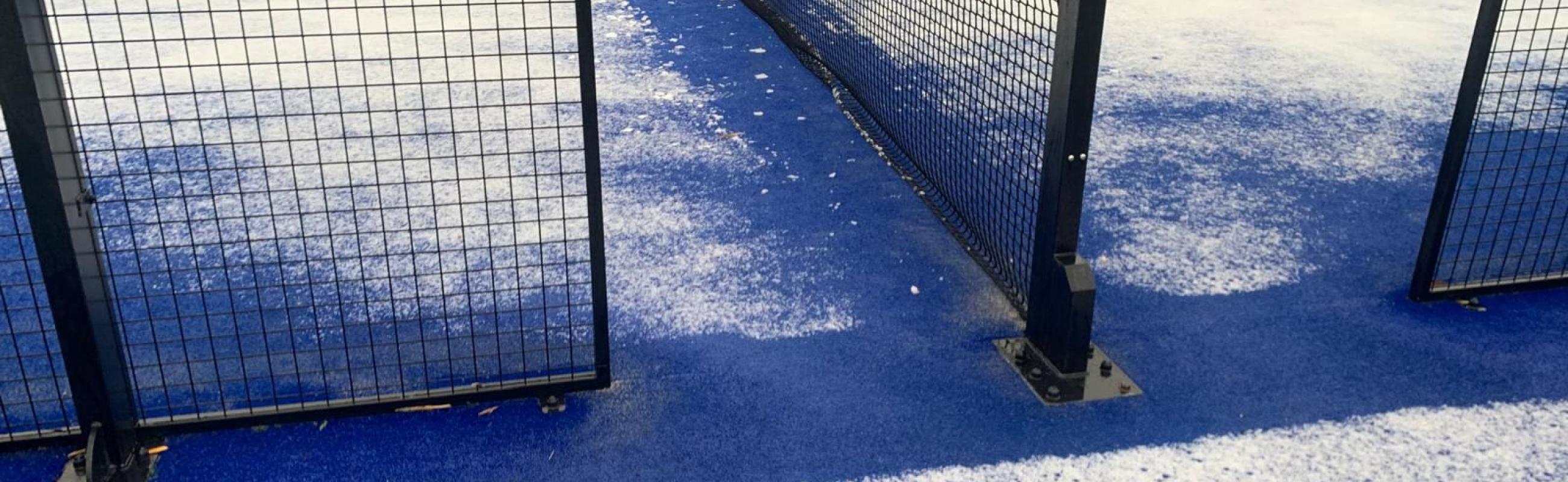
=> Snow and ice in themselves are not harmful to the field, and they may be allowed to melt naturally.
=> Playing on a snow-covered field is, of course, prohibited for safety reasons: playing on a snowy field causes the snow to become compacted and turn into ice, creating an extremely slippery surface. This ice layer will take longer to melt, and it also becomes impossible to remove this layer of snow/ice—containing frozen carpet fibers—from the field without damaging the turf.
=> Fresh snow may be removed from the field using a snow blower. Removing snow with a shovel or brush may damage the turf. If this nevertheless seems necessary, a plastic shovel with a rubber edge may be used. Also keep in mind that a significant amount of sand may be removed from the field at the same time.
=> Chemical removal: In cases of extreme necessity (maximum 3 times per year and only once every 14 days), a chemical agent may be used to remove snow/ice: ICI PDV (pure dry vacuum salt) or ICI Dentritic salt. However, this is environmentally harmful. Avoid its use whenever possible and always strictly respect the prescribed quantities.
=> Playing during freez-thaw conditions is dangerous, as certain areas of the field may thaw sooner or later than others. If the base layer is still frozen, water may remain on the field. This creates hazardous zones and results in an inconsistent playing surface that players cannot anticipate. It is therefore very dangerous to play under these weather conditions. Ensure that the entire field has fully thawed before allowing play.
Conclusion: Let nature do its thing—and perhaps trade your boots for a beer in the club bar a little earlier than usual. 🍺